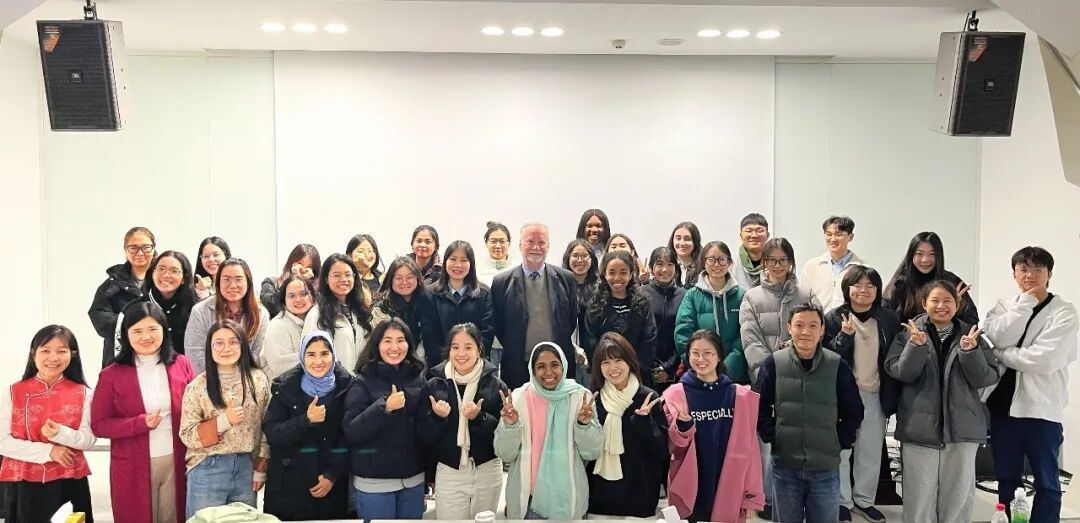
On 10 December, Rémi Mathieu, distinguished French sinologist and former Director of the Centre for East Asian Civilisations at the French National Centre for Scientific Research (CNRS), delivered an academic lecture entitled "The Book of Songs and Women" at the School of Journalism and Communication. Hosted by the School and organised by the Institute of Aesthetics and Critical Theory, the lecture was chaired and interpreted throughout by Associate Research Fellow Gong Junji. Over forty faculty members and students from the School of Communication gathered to explore the world of "she" within this ancient anthology of poetry.
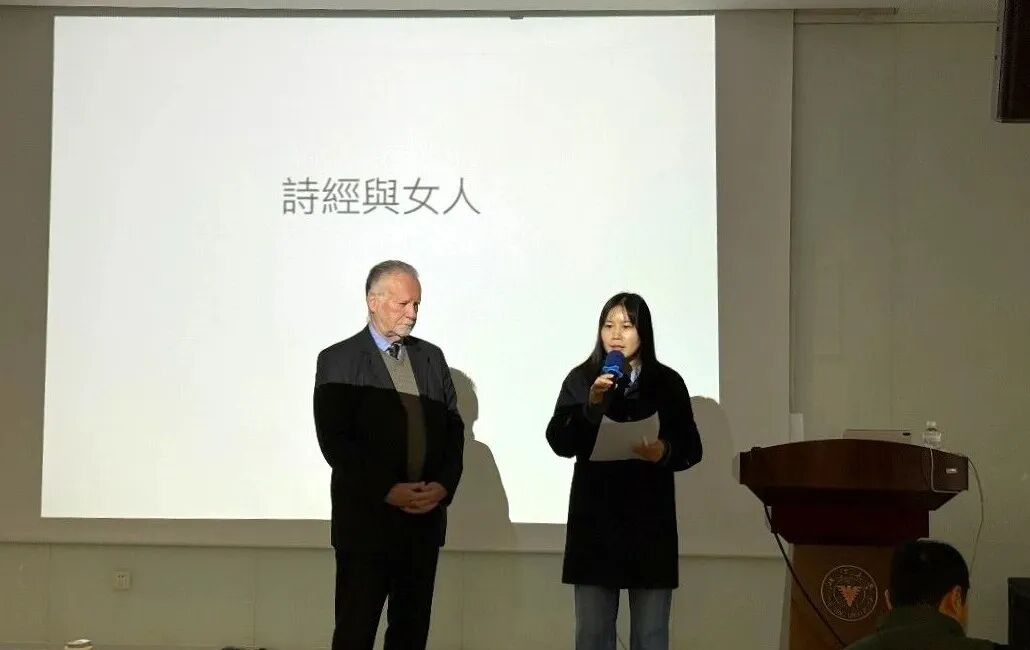
Rémi Mathieu stands as one of the most influential sinologists in the French-speaking world today. He previously served as Director of the Centre for East Asian Civilisations at the French National Centre for Scientific Research (CNRS) and was awarded the Special Contribution Prize for Chinese Books in 2017. He has long been deeply engaged in the translation and study of ancient Chinese classics, having translated and published works including Ancient Chinese Mythology, Guoyu, The Book of Songs, Chu Ci, The Analects, Mencius, Xunzi, The Great Learning, The Doctrine of the Mean, and the Tao Te Ching and Zhuangzi, Liezi, and Huainanzi. He has authored scholarly works on ancient Chinese mythology, the Guodian Chu Bamboo Slips, Confucian and Daoist thought, as well as commentaries on The Travels of King Mu, Classic of Mountains and Seas, and Records of the Search for Spirits. His independently produced French annotated translation of The Book of Songs combines scholarly rigour with literary elegance, standing as the most acclaimed French rendition to date. His French edition of Anthology of Chinese Poetry (featuring 1,800 poems), which he edited, was included in Gallimard's prestigious Bibliothèque de la Pléiade series. This represents the highest level of recognition and accolade for a work within the French-speaking world.
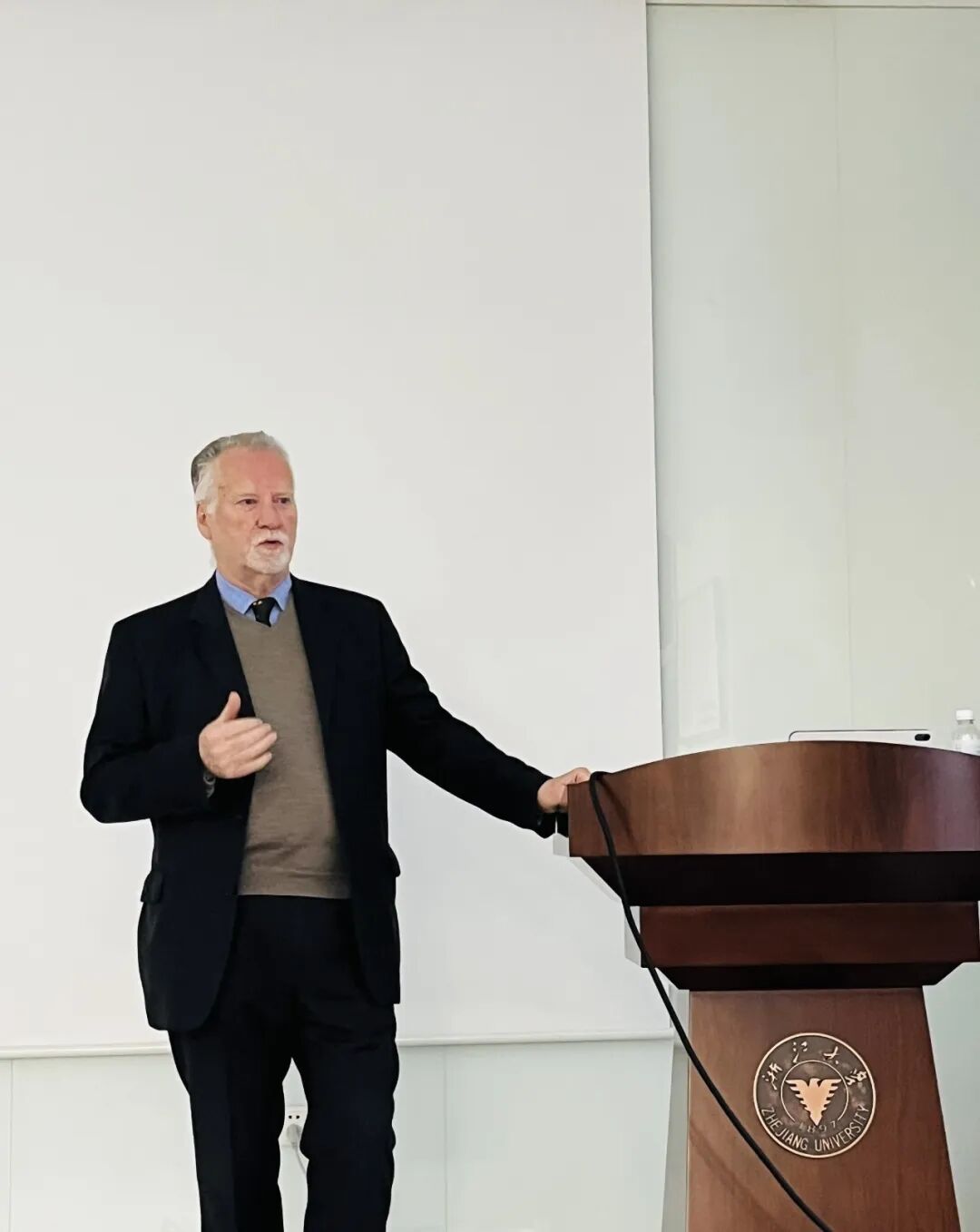
In this lecture, Matthew began by examining the 'National Airs' section of the Book of Songs, noting that this collection best preserves the authentic aspects of early social life: it depicts both the daily labour of rural villages and walled towns, and the gatherings and singing occasions centred around autumn harvests, weddings, and festivals. Unlike traditional texts focused on ritual systems and historical records, the Book of Songs presents vivid fragments of emotional currents and interpersonal interactions within early Chinese society through poetic form.
Addressing "the status of women in the Book of Songs," Matthew employs extensive close reading to distinguish between common and noblewomen in the poems: the former are often defined by labour and social function—gathering plants, rearing silkworms, weaving silk, fishing—with verbs like "gather" frequently linking agricultural rhythms to women's routines; The latter, however, frequently appear in ceremonial contexts such as weddings and sacrifices, their core role being to forge familial alliances and perpetuate clan lineage. Through analysis of relevant passages, Matthew emphasises that the poems reveal certain facets of women's circumstances at the time; yet poetry is not an ethnographic manual, nor does it aim to objectively depict interpersonal relationships. Poetry aims to stir emotion, evoking resonance or rejection, rather than faithfully reproducing reality—though its depictions are often deeply rooted in contemporary social realities, while simultaneously transcending and idealising them to some extent.
Addressing "the role of women in the creation and transmission of the Book of Songs," Matthew posits that the prevalence of first-person female narrators and emotionally female-centred compositions strongly suggests women played a significant role in the oral composition and transmission of these ballads. Drawing on specific textual analysis, he identifies a group of women, including Lady Xu Mu, as likely candidates for China's earliest traceable "female poets." He speculates that approximately 45% of the poems in the "National Airs" section were most likely composed by women, or more likely created and transmitted orally by them. However, this assessment remains limited: most poems lack explicit gender markers, making definitive conclusions difficult.
The third part of the lecture focused on "Love in the Book of Songs". Matthew analysed how themes of romantic encounters, broken trysts, and jealous longing recur throughout the text, using masterpieces such as "The Oystercatcher", "The Mulberry Grove", and "Gathering the Kudzu" as case studies. He particularly noted how these poems repeatedly depict scenarios of male-female meetings, secret rendezvous gone awry, and jealous yearning. "By the Eun and Wei," and "The Fair One." He particularly noted that depictions of love in the Book of Songs are often intrinsically linked to specific spaces and objects: mulberry groves, riverbanks, city gates, and fish weirs serve not only as settings for labour and daily life but also as spaces where emotions blossom and tensions build; while flowers and fruits serve as tokens exchanged between lovers, bearing both practical and symbolic significance.
The fourth section of the lecture explored "Separation and Disappointment in the Book of Songs." This theme is primarily presented through the female perspective: husbands are long absent due to war, corvée labour, or distant journeys, leaving wives to express longing, fear, and solitude amidst endless waiting. Simultaneously, the profound portrayal of being forgotten and betrayed by husbands favouring new lovers is explored. Though men also harbour homesickness whilst away, women's lamentations are rendered with greater nuance and poignancy. Notably, shifts in affection often intertwine with familial succession and political order, rendering these poems reflections not only of personal sorrow but also of ancient society's intricate structures.
In his concluding remarks, Matthew reframes the discussion within the broader context of "The Book of Songs and Ancient Chinese Intellectual Tradition." He contends that unlike other pre-Qin classics dominated by moral exhortations and ritualistic codes, The Book of Songs—particularly its "National Airs" section—preserves extensive firsthand accounts of gender relations, romantic sentiments, and women's experiences. These texts reveal that gender relations and emotional expression in ancient Chinese society were far more complex and diverse than later generations imagined. This also prompts us to reconsider the Book of Songs today, to listen anew to the tender yet resolute voices of its female narrators.
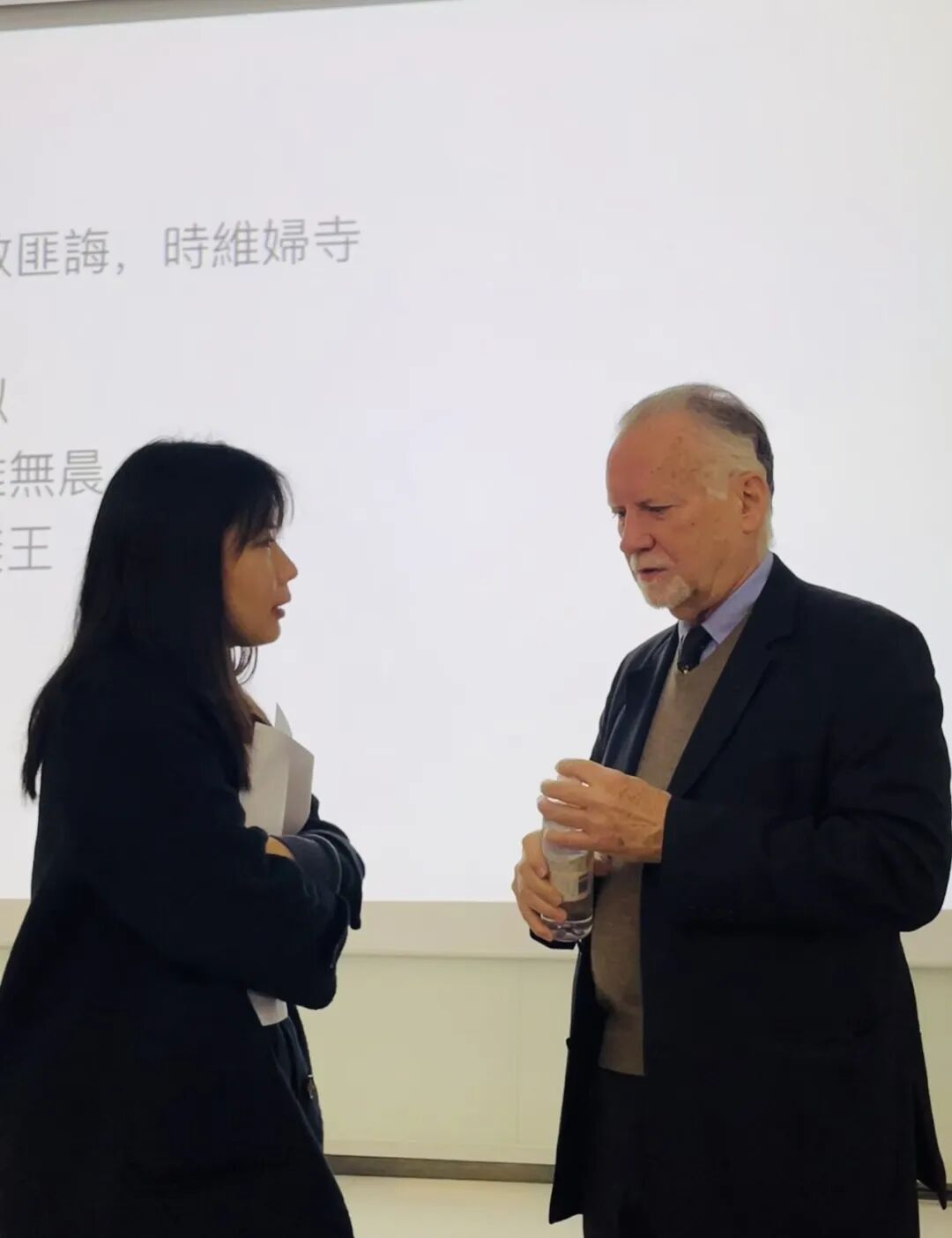
During the interactive session, faculty and students enthusiastically posed questions regarding the translation and reception of the Book of Songs, to which Matthew responded patiently and comprehensively. This lecture not only provided an opportunity for attendees to revisit the Book of Songs but also opened new avenues for exploring classical Chinese poetry through gender, social history, and cross-cultural perspectives.