

A cross-cultural theatre discussion themed “Ugliness on Stage: A Shared Perspective Across East and West” was recently held. Professor Hu Zhiyi and Research Fellow Xu Yujun co-hosted the event, exploring the shared resonance between Shakespearean drama and Chinese opera by examining their common origins in theatre and ritual.

The beauty of theatre lies not only in the elegance and depth of feeling of the leading roles, but also in the wit and clarity of the comic relief provided by the clown. An ancient Chinese saying goes, ‘No play is complete without a clown’, and in Western Shakespearean drama, the ‘Fool’ runs through the entire narrative, becoming an indispensable element of the play. The discussion delved deeply into the aesthetic function of the clown, the differences between Eastern and Western traditions, and the paths of modern adaptation, demonstrating the rebirth of classics within a contemporary context. Through vivid practical examples, the two guests guided the audience beyond the surface of the drama to appreciate the profound cultural significance shared by Eastern and Western theatre.
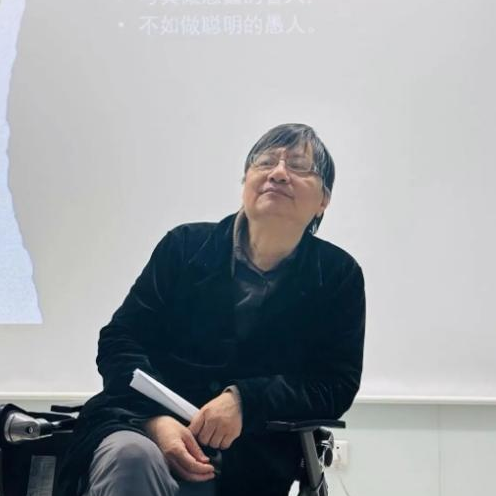
Interviewee: Hu Zhiyi
Professor and PhD supervisor, Department of Film, Television and New Media, School of Communication and International Culture, Zhejiang University
Honorary President, Chinese Association for Theatre Theory and History

Moderator: Xu Yujun
Research Fellow under the ‘Hundred Talents Programme’ and PhD supervisor, Department of International Culture, School of Communication and International Culture, Zhejiang University
Council Member of the Beijing Opera Criticism Society; Member of the Shakespeare Association of Great Britain
Xu Yujun: In several of your articles, you regard theatre as a form of ‘aesthetic ritual’. Could you elaborate on the relationship between theatre and ritual, drawing on the history of theatre, and explain the role played by the clown within this relationship?
Hu Zhiyi: Theatre essentially derives from religious rituals; it is the ‘aesthetic transformation’ of ritual. The core of ritual lies in ‘collective participation and emotional resonance’, and theatre transforms this ritualistic nature into a performing art, preserving the spiritual essence of ritual whilst endowing it with aesthetic value. The origins of Chinese opera are deeply rooted in folk rituals such as the welcoming of deities and village festivals. Even today, rural communities fully preserve these traditions during festivals and celebrations—folk customs such as temple fairs and religious processions serve as the primitive prototypes of theatre. These ritualistic activities already contain core theatrical elements such as ‘performance, narrative and interaction’; in essence, they constitute a simple form of ‘aesthetic ritual’.
The development of theatre has also experienced its ups and downs. With the rise of television in the 1980s and 1990s, theatre faced near extinction, with few plays to perform; yet now, as the influence of television and film wanes, theatre has, conversely, flourished, with ever-increasing audiences. The crux lies in the fact that theatre’s nature as an ‘aesthetic ritual’ cannot be replaced by screen-based media—the audience’s physical presence and real-time interaction between performers and spectators are precisely the core of theatre’s ritualistic quality. From the early days when men and women could not perform together—with men playing female roles—to the later era when Hong Shen returned from the United States to champion mixed-gender performances, and subsequently to the period when Director Zhang Pengchun at Nankai University nurtured masters such as Cao Yu through his productions, theatre has undergone constant evolution. Later, as times changed, theatre gradually separated from folk rituals, no longer relying solely on oral and tacit folk traditions, but instead requiring rescue-level protection and systematic transmission at the national level. Yet its roots have always remained in the folk tradition, and the essence of its ‘aesthetic ritual’ has never changed.
The clown was born out of this very folk ritual; from the origins of theatre, it has been an indispensable part of the art form since its inception. Through its witty and comical performances, it defuses the solemnity of certain rituals, infusing them with a touch of the mundane, ensuring that the ‘aesthetic ritual’ no longer remains aloof but instead draws close to the lives of the people, becoming a vital conduit linking the sacredness of ritual with the authenticity of daily life.
Xu Yujun: You have previously emphasised that, compared to film and television, the most crucial aspect of theatre lies in its sense of presence and audience participation. How do you understand the role of the audience within ‘ritual theatre’? Is the development of folk theatre also inseparable from audience participation?
Hu Zhiyi: The ritualistic nature of theatre is, at its core, a ritual of ‘collective participation’—rituals fulfil people’s need to break free from the monotony of daily life. Just as during festivals and celebrations, people require a lively atmosphere to enrich their lives, so too does theatre. The audience is not a passive bystander, but an integral part of ritualistic theatre.
In folk traditions, for a long time, theatre was not an art form one ‘paid to watch’, but rather a form of spiritual recreation for the masses. In rural areas, when someone was celebrating, they would invite a theatre troupe to perform for three days, free of charge for everyone to watch. This free model also reflects the folk nature of theatre: the enthusiasm of the audience is the very soil in which theatre thrives. Although urban audiences have grown accustomed to buying tickets to see plays, the theatre festivals now held across the country—such as the Zhejiang Theatre Festival and the China Theatre Festival—often attract audiences through free tickets and complimentary performances. Essentially, this is still about reawakening the audience’s sense of participation. This is particularly true for university students; theatre is, in itself, the art of the student. Audience participation is not merely ‘watching a play’, but ‘immersing oneself’—just as we did in our university days, when we would scrounge tickets to see plays, organise drama societies, and take to the stage ourselves. It is this passion for being present that lies at the heart of theatre’s sense of ritual.
Xu Yujun: There is a long-standing saying in Chinese opera that ‘no play is complete without a clown’. From the perspective of aesthetic significance and the function of the role, what do you believe is the core reason behind this? Where does the value of the clown lie?
Hu Zhiyi: The essence of ‘no play is complete without a clown’ lies, firstly, in the fact that the clown embodies the ‘texture’ of the drama and serves as a ‘mirror’ of life. The clown in traditional Chinese opera is a character type distilled from the audience’s ‘insight into a certain kind of person’; through exaggerated and comical performance, it reflects the human condition and the ways of the world. Secondly, aesthetics is a study of the sensuous; both ‘appreciating beauty’ and ‘appreciating the grotesque’ are sensuous experiences. The ‘grotesque’ displayed by the clown is not usually intended merely to caricature, but rather to use ‘the grotesque’ to express the complexity of human nature—allowing the audience to see contradictions, hypocrisy and sincerity amidst the laughter, thereby achieving the aesthetic effect of ‘revealing beauty through the grotesque’. Without the contrast provided by the clown, the elegance of the leading role would appear insubstantial; without the clown’s exposure of hypocrisy, drama would lack a dimension of self-reflection.
Xu Yujun: To a certain extent, the clown serves as the ‘safety valve’ of drama. On the Chinese opera stage, the clown is the most down-to-earth figure, daring to speak the unspeakable and using his ‘silver tongue’ to expose the falseness of officialdom and human relationships; In the history of Western theatre, the clown, the jester and the ‘wise fool’ serve a similar purpose; they are ‘permitted to speak the truth’, using satire and jest to pierce through power and propriety, playing the role of the ‘anti-order’. Whilst appearing to be mere fools, they actually help people to re-examine the absurdity of everyday life. From this perspective, whether in the East or the West, the adage ‘no play is complete without a clown’ holds true—without this ‘person permitted to break the rules’, theatre loses a distorting mirror that reflects the truth.
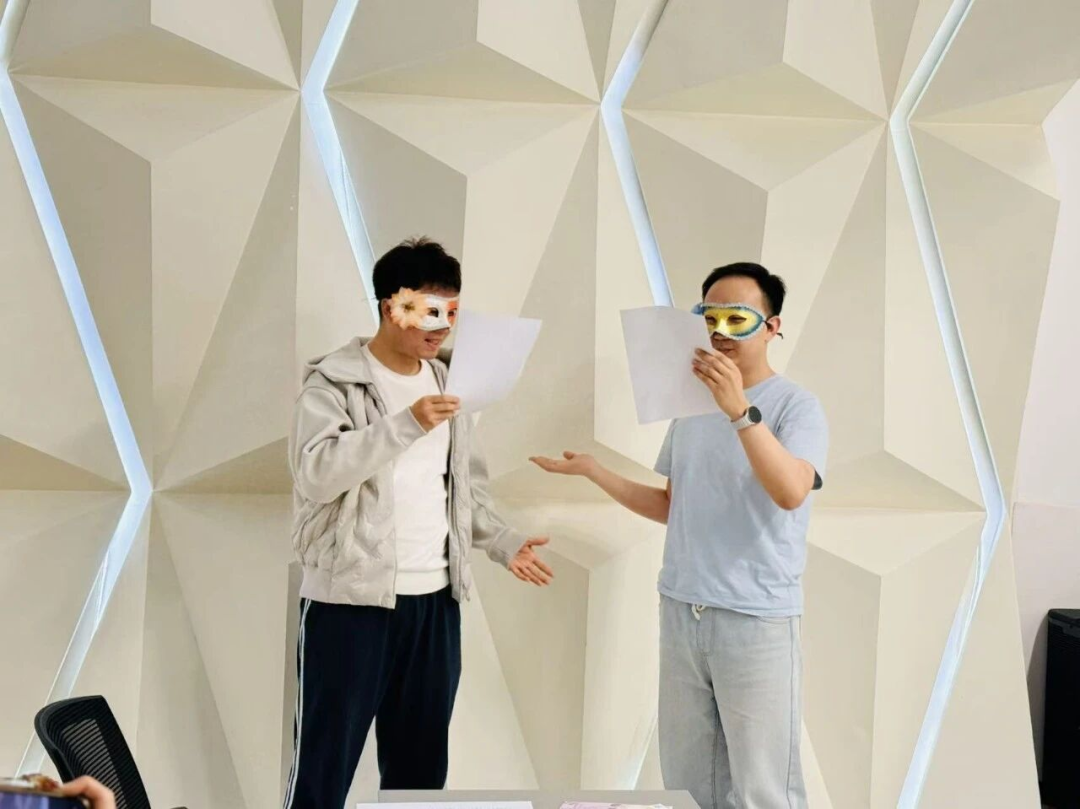
Live Interaction: Students donning masks to perform a classic dialogue from *Twelfth Night*
Xu Yujun: You mentioned that the Western ‘fool’ shares similar functions with the comic character in Chinese opera. Could you interpret the deeper connections between the two from the perspective of ‘ritual/archetype’? Is this connection also the core element that allows the saying ‘no play is complete without a comic character’ to transcend East and West?
Hu Zhiyi: Essentially, both are archetypal symbols of ‘self-reflection’ within theatrical rituals, fulfilling the core functions of ‘bridging life and ritual, exposing hypocrisy, and conveying truth’. Specifically, in Chinese opera, the ‘chou’ is a fixed role category, divided into literary clowns and martial clowns, among others. It is highly codified in terms of conventions and physical movements, and creates a ‘pleasure in the grotesque’ through facial makeup (the ‘little flower face’), stylised movements, and dialectal slang; its core lies in being ‘down-to-earth and speaking the truth’. Western clowns, on the other hand, generate humour through exaggerated costumes, uncoordinated movements and double entendres, the essence of which is also ‘concealing lucidity through buffoonery’.
From the perspective of ritual archetypes, both are roles ‘permitted to cross boundaries’—in Chinese folk theatrical rituals, the clown can break the constraints of etiquette and law, using humour to lighten the atmosphere and convey the will of the people; in Western court ceremonies and theatre, jesters and clowns could defy kings and mock the nobility, yet were forgiven precisely because ‘I am a clown’. This privilege of ‘permitted transgression’ makes them an indispensable part of theatrical rituals; without them, the ceremonial nature of theatre would lack a dimension of self-reflection and lose the down-to-earth quality that connects it to the masses.
Xu Yujun: Moreover, whether it be the comic roles in Chinese opera or Western clowns, their functions are fundamentally the same—even in Shakespearean plays, the ‘Fool’ and the comic roles in our opera are, at their core, characters who ‘dare to speak the truth and regulate the rhythm’. Take Feste in Shakespeare’s *Twelfth Night*, for instance. His famous line, ‘Better a witty fool than a foolish wit’, encapsulates the wisdom of the clown; though he appears to be fooling about, he uses humour to awaken others—a function that mirrors that of the Chinese opera clown perfectly.
Nowadays, there are increasing numbers of contemporary adaptations of Shakespearean plays and Kunqu opera. Take, for instance, the Northern Kunqu Theatre’s adaptation of Li Yu’s *The Kite Mistake*, which significantly reimagined the character of Zhan Aijuan, the comic figure, by adding elements of charm and candour. This allows her to bluntly expose others’ hypocrisy and pretence, much like the National First-Class Actress Wang Jin, who plays Zhan Aijuan. who, in her interpretation, breaks through the boundaries of traditional roles, positioning Zhan Aijuan somewhere between the ‘huadan’ and ‘caidan’ roles. Rather than deliberately exaggerating her clownish mannerisms, she infuses the character with endearing and unpretentious qualities, making her vivid and three-dimensional—though she is neither strikingly beautiful nor highly educated, she is free from affectation and hypocrisy, bold in love and hate, and straightforward and open-hearted. most crucially, she dares to directly expose others’ hypocrisy and pretence, refusing to pander or curry favour, and lives a life of purity and clarity. In your view, what modern aesthetic insights might this adaptation offer the audience?
Hu Zhiyi: In Li Yu’s *The Kite Mistake*, Zhan Aijuan, as portrayed in traditional classical texts, serves primarily as a vehicle for ‘clownish’ traits—ugly, boorish, and lacking in talent. Her core function is as a symbol of ‘clownishness’, driving plot twists and creating comic effect. Contemporary adaptations of certain operatic works have shattered this stereotype. Whilst retaining Zhan Aijuan’s core function as a ‘clown’, they have endowed her with character traits that resonate with modern audiences, enabling the traditional clown to strike a deeper chord with contemporary viewers. The modern aesthetic insight offered by such adaptations lies in their subversion of the stereotypical notions that ‘ugliness equals evil’ or ‘ugliness equals farce’, thereby achieving a fusion of traditional and modern aesthetics. Whilst preserving the essence of Kunqu opera, these adaptations endow Zhan Aijuan with a personality that resonates with contemporary audiences, transforming the traditional comic role from a ‘static museum piece’ into a ‘living legacy integrated into daily life’, thus granting the traditional character an enduring vitality.
Xu Yujun: Based on your observations, what significance do contemporary adaptations of classic plays hold for the transmission of traditional theatre and the exchange between Eastern and Western theatre?
Hu Zhiyi: The core significance of contemporary adaptations lies in ‘bringing classics and traditions to life’. Whether it be the characterisation of Zhan Aijuan or the lucid portrayal of the clown in Shakespearean plays, the essence is to enable the audience, through the stylised performance of the clown, to recognise the fundamental affinity between the wisdom of the Western clown and the penetrating insight of the Chinese clown. The reason why the contemporary Kunqu adaptation of *The Kite Mistake* has gained audience approval is that it imbues this ‘clown’ with a down-to-earth quality and points of empathy, showing us that even ‘imperfect’ people have value as long as they live authentically and with candour. The same holds true for modern adaptations of Shakespearean plays. The reason the clown character has transcended four centuries to still move contemporary audiences is precisely because his ‘courage to speak the truth’ resonates with the modern pursuit of sincerity and clarity.
Xu Yujun: Indeed, such adaptations also offer insights for the preservation of our theatrical heritage: preservation does not mean clinging to the past, and innovation does not mean subversion. Just as the Northern Kunqu Theatre’s *The Kite Mistake* retains the comedic essence of Li Yu’s original work and the stylised beauty of Kunqu, whilst endowing Zhan Aijuan with contemporary character traits; just as modern adaptations of Shakespeare’s plays preserve the linguistic charm and spiritual core of the original text, whilst using contemporary stagecraft to bring the classics closer to the public. This approach not only ensures the transmission of traditional theatre but also resonates with contemporary audiences. It is the key to the clown’s rebirth in the modern era, and indeed an effective pathway for the exchange and fusion of Eastern and Western theatre.